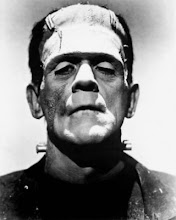
Mary Shelley gave Frankenstein such a powerful interest for science. His powerful interest lead him into studying more into the field. Frankenstein had every intention of turning science into his profession. Very fittingly, science was becoming such a new and big field that had many varieties and possible titles as professions in the 1800s.
"The 19th century saw the birth of science as a profession; the term scientist was coined in 1833 by William Whewell[9]. Among the most influential ideas of the 19th century were those of Charles Darwin, who in 1859 published the book The Origin of Species, which introduced the idea of evolution by natural selection. Louis Pasteur made the first vaccine against rabies, and also made many discoveries in the field of chemistry, including the asymmetry of crystals. Thomas Alva Edison gave the world a practical everyday lightbulb. Karl Weierstrass and other mathematicians also carried out the arithmetization of analysis. But the most important step in science at this time was the ideas formulated by Michael Faraday and James Clerk Maxwell. Their work changed the face of physics and made possible for new technology to come about."
(http://en.wikipedia.org/wiki/19th_century)
-Michael
Tuesday, April 13, 2010

Breakthrough in physics
In addition to the new-found theory of Galvanism in the 1800s, new breakthroughs within electricity impacted the scientific world. Two main scientists that strongly contributed to this impact were James Clerk Maxwell and Michael Faraday. Both were excellent scientists in their field of physics, and in further detail, electricity and magnetic electricity.
"
Since Mary Shelley used the very believable idea of electricity to give birth to Frankenstein's creation, the new impact of electricity and electromagnetic fields is very fitting as an influence for the book.
-Michael
"James Clerk Maxwell (13 June 1831 – 5 November 1879) was a Scottish[1] theoretical physicist and mathematician. His most important achievement was classical electromagnetic theory, synthesizing all previously unrelated observations, experiments and equations of electricity, magnetism and even optics into a consistent theory.[2] His set of equations—Maxwell's equations—demonstrated that electricity, magnetism and even light are all manifestations of the same phenomenon: the electromagnetic field. From that moment on, all other classic laws or equations of these disciplines became simplified cases of Maxwell's equations. Maxwell's work in electromagnetism has been called the "second great unification in physics",[3] after the first one carried out by Isaac Newton.
Maxwell demonstrated that electric and magnetic fields travel through space in the form of waves, and at the constant speed of light. Finally, in 1864 Maxwell wrote "A dynamical theory of the electromagnetic field", where he first proposed that light was in fact undulations in the same medium that is the cause of electric and magnetic phenomena.[4] His work in producing a unified model of electromagnetism is considered to be one of the greatest advances in physics."
(http://en.wikipedia.org/wiki/James_Clerk_Maxwell)"
Michael Faraday, FRS (22 September 1791 – 25 August 1867) was an English chemist and physicist (or natural philosopher, in the terminology of the time) who contributed to the fields of electromagnetism and electrochemistry.
Faraday studied the magnetic field around a conductor carrying a DC electric current, and established the basis for the electromagnetic field concept in physics. He discovered electromagnetic induction, diamagnetism, and laws of electrolysis. He established that magnetism could affect rays of light and that there was an underlying relationship between the two phenomena.[1][2] His inventions of electromagnetic rotary devices formed the foundation of electric motor technology, and it was largely due to his efforts that electricity became viable for use in technology."
http://en.wikipedia.org/wiki/Michael_Faraday)Since Mary Shelley used the very believable idea of electricity to give birth to Frankenstein's creation, the new impact of electricity and electromagnetic fields is very fitting as an influence for the book.
-Michael
Wednesday, April 7, 2010

X-rays were discovered in 1895 by Wilhelm Konrad von Roentgen (1845-1923). Roentgen was a German physicist who described this new form of radiation that allowed him to photograph objects that were hidden behind opaque shields. He even photographed part of his own skeleton. X-rays were soon used as an important diagnostic tool in medicine. Roentgen called these waves "X-radiation" because so little was known about them.
like all other scientist frankenstien also did the experiment, and in the result of that experiment, he got a monster. Before the creation of monster he was so pleased to have a a companion with him, but when the monster he created started disturb him, then it was the most horrible fact of what he crerated unlike other scientists.

An electromagnet is a device in which magnetism is produced by an electric current.
British electrician, William Sturgeon invented the electromagnet in 1825. The first electromagnet was a horseshoe-shaped piece of iron that was wrapped with a loosely wound coil of several turns. When a current was passed through the coil; the electromagnet became magnetized and when the current was stopped the coil was de-magnetized.
British electrician, William Sturgeon invented the electromagnet in 1825. The first electromagnet was a horseshoe-shaped piece of iron that was wrapped with a loosely wound coil of several turns. When a current was passed through the coil; the electromagnet became magnetized and when the current was stopped the coil was de-magnetized.
Monday, April 5, 2010
www.answers.com/topic/industrial-revolution

www.answers.com/topic/industrial-revolution states that the cotton Gin machine was invented by an american inventor and engineer named Eli Whitney. He invented it in 1794 to make it easier in the industrial factories. It was made to remove seeds off cotton with a machine instead of removing them manually, making it less labor but more efficent.
-Elaine Punch
-Elaine Punch

www.wikipedia.org/wiki/Henry_Bell_(engineer) explains how Henry Bell invented the first successful passenger steam-powered boat in 1812. It was built in Europe whicn it sailed Greenock and Scotland along a river called Clyde. The boat name was Comet and it was the beginning of a revolution in navigation. It held about 25 tons and ran off a engine with three horse power. This boat went seven miles per hour.
-Elaine Punch =)
-Elaine Punch =)
http://ohioline.osu.edu/cd-fact/0133.html

Researchers of http://ohioline.osu.edu/cd-fact/0133.html defines Peter Durand as a Englishman who invented the metal canister (1810)in order to preserve food. It was used to store and make food last longer. It was invented for armies to use during wars and stays in the winter so that they prevent killing and warefare. To open the metal can a person would have to use a hammer or a chistle.
Elaine Punch =)
Elaine Punch =)
Subscribe to:
Posts (Atom)